


BESA Leadership
President And Officers
BESA's President and Officers provide senior industry leadership for the Association, representing our members and helping shape BESA's strategic direction.
Drawn from across the building engineering sector, they bring extensive industry experience and a shared commitment to raising standards, strengthening our industry and ensuring BESA remains focused on the needs of its members.

BESA President 2026/27
Anna Shephard
Operations Director, OSM Ventilation, an NG Bailey Group company
Championing greater pride in building engineering and the people behind it, as the industry embraces new opportunities, raises standards and proves its increasingly vital role in the built environment.
Taking Pride In Building Engineering Services
Anna Shephard is President of the Building Engineering Services Association for 2026/27.
With nearly two decades of experience in construction and building engineering, Anna has built her career across health and safety, operations and senior business leadership.
Her presidential year will focus on encouraging greater pride in building engineering, championing the people and businesses behind the built environment and demonstrating the increasingly important role the industry plays in creating safer, healthier, more sustainable and better performing buildings.
Anna also wants to inspire the next generation to see building engineering as an exciting and rewarding career, while encouraging businesses across the sector to embrace competence, collaboration and higher standards.
Presidential Priorities - Leading A Better Industry

Pride
Champion the people, skills and expertise behind building engineering and increase recognition of the industry's contribution to the built environment.

People
Inspire more young people to discover the opportunities available in building engineering and support the development of the next generation of skilled professionals.

Competence
Encourage businesses to demonstrate competence, embrace higher standards and respond positively to the greater accountability expected across construction.

Collaboration
Bring businesses and the wider industry together to tackle shared challenges, strengthen supply chains and create meaningful change.
From The Family Business To BESA President
Family Roots
Building engineering has been part of Anna's life from an early age. Her parents established a ductwork contracting business in East Sussex, giving her a first hand understanding of the rewards and challenges of running a specialist business. She later studied International Business and Modern Languages at Aston University.
Experience Beyond Construction
Anna began her career on the United Biscuits graduate training programme. She spent six years in production and health and safety roles in the FMCG sector, including at PepsiCo, before returning to building engineering. At E&S Ventilation, she progressed from Health and Safety Manager to Operations Manager and then Managing Director following her parents' retirement.
Industry Leadership
Anna led the family business through economic uncertainty, the pandemic, skills shortages, rising costs and a growing focus on competence and building safety. She is now Operations Director at OSM Ventilation, an NG Bailey Group company, which engineers, manufactures and delivers industrial ventilation and ductwork solutions for the construction industry.
BESA President's Address 2026
Anna Shephard delivered her first address as BESA President at the 2026 BESA President's Lunch on 24 September at The Oxo Tower, London, setting out an optimistic vision for building engineering and calling on the industry to take greater pride in its people, expertise and increasingly important contribution to society.
Fellow members, honoured guests, ladies and gentlemen, welcome to the 2026 BESA President’s Lunch.
I am genuinely excited, and just a little daunted, to be taking on the role of your President. Thank you for the trust you have placed in me. It is a privilege to serve the Association and lead us through what I believe will be a pivotal year.
Our businesses face real challenges, but I am genuinely optimistic because this industry has shown, time and again, that it can adapt, improve and deliver.
Our Top 30 M&E Contractors Report, which we are sharing today, shows companies and individuals innovating, collaborating and raising standards to keep our industry moving forward.
It also demonstrates that culture change, competence, compliance and better behaviours are foundations for business success.
Our sector’s collective turnover has risen from £4.7 billion to more than £6 billion since last year’s report. That is worth celebrating because it was achieved in the face of considerable economic pressure and during a period of global upheaval.
Our businesses are embracing the opportunities offered by automation, artificial intelligence, integration and better use of data, not simply to cut costs, but to improve quality, reduce rework and make better technical decisions earlier.
More of us are also making collaboration a practical way of working because the scale of the challenges ahead means none of us can succeed alone.
What the Olympics taught me about collaboration
Many of you will remember the London 2012 Olympic Games, just up the river from here. I was there in the stadium on that historic Super Saturday when British gold medals just kept coming.
While I was proud of the athletes’ achievements, I was also reflecting on the engineering teams that had made it all possible by building the stadium, including people from my own company.
That was true collaboration. Different companies focused on one shared outcome, with everyone pitching in to make it happen.
Why fair payment matters
I work for a major contractor now, but my building services journey began around the kitchen table with my parents, who set up our family ductwork business in 1972.
As a teenager, I helped my mother with the payroll and retyped contracts, so I was exposed from an early age to the financial challenges faced by small businesses in our sector.
I remember my father railing against retentions even then. We reached the point where more than £1 million was being held back from a business turning over just £12 million.
Ultimately, a major bad debt put the company into liquidation. If we had been able to free up even some of the retention money we were owed, we might well have weathered the storm.
It was retentions that led me to take a more active role in BESA, and I went on to chair the Legal & Commercial Committee for many years. That experience showed me the value of working through our trade association to tackle challenges no single business can solve alone.
It will therefore be a particular source of pride if my presidential year coincides with long awaited legislation that finally makes retentions illegal.
I want to congratulate and thank everyone at BESA who has worked for decades to remove this unfairness from our industry. Making our industry fairer also makes it better and, therefore, more attractive to future generations.
We are fortunate to have Nicola Walters from the Department for Business and Trade as our guest today. Nicola and Fergus Harradence recognised the problems that late payment and cash retentions cause our industry and robustly challenged the status quo in the face of concerted opposition.
We have all heard that it cannot be done or that it is impossible to change. They have helped make that change happen. On behalf of BESA member companies, thank you.
It is also important to acknowledge the work of our ECA colleagues on this issue, particularly CEO Steve Bratt. ECA President Glenn Grant is also with us today. It is only by working together that we can achieve meaningful change.
Inspiring the next generation
My background means my children know what ductwork is and at least pretend not to be bored when I point out the buildings we have helped to create. But the same cannot be said for many young people today.
There has been considerable discussion about the one million young people who are NEET, meaning not in employment, education or training, and how we can harness their unused potential.
Our industry needs more from this digitally literate generation, and that is another reason for my optimism. Building services has changed beyond recognition and now offers huge opportunities.
Look at where our skills are in demand today: power grids, data centres, life sciences, defence, healthcare and more. It is a world away from the industry I joined more than 20 years ago and the one my parents knew.
Our Top 30 report shows that office construction and fit out remain strong, while infrastructure output is forecast to rise by more than 3% this year and by a further 3% in 2027.
Building engineering contributes, on average, more than 50% of construction project value, and our specialist services are essential to delivering that work.
AI will bring significant efficiency benefits, but you cannot build new infrastructure from your bedroom. We still need hands on skills and people working together, talking around the table with fellow professionals and turning concepts into physical structures.
It is into this world that we must recruit more young people who are currently outside employment, education and training.
Skills, standards and attitude
Apprentices and new entrants need to start out on the right path. Skills and technical standards matter, but so does attitude. If we get that right, we build careers, improve quality and delivery, and strengthen the whole industry.
BESA is helping through skills initiatives including the revamped School Engagement and Engineering Discovery programme and our Skills Legacy campaign.
Supported by the Manly Trust, the scheme is recruiting experienced engineers to become qualified trainers and assessors who can help plug significant gaps in our industry’s further education provision.
That support is vital if we are to meet rapidly growing demand for skilled workers, and I am pleased to see participation increasing.
I hope more of you will consider joining the scheme because there are few things more rewarding than giving a young person an opportunity and then seeing them progress.
But there is another question we need to ask ourselves.
Will they give our industry a chance?
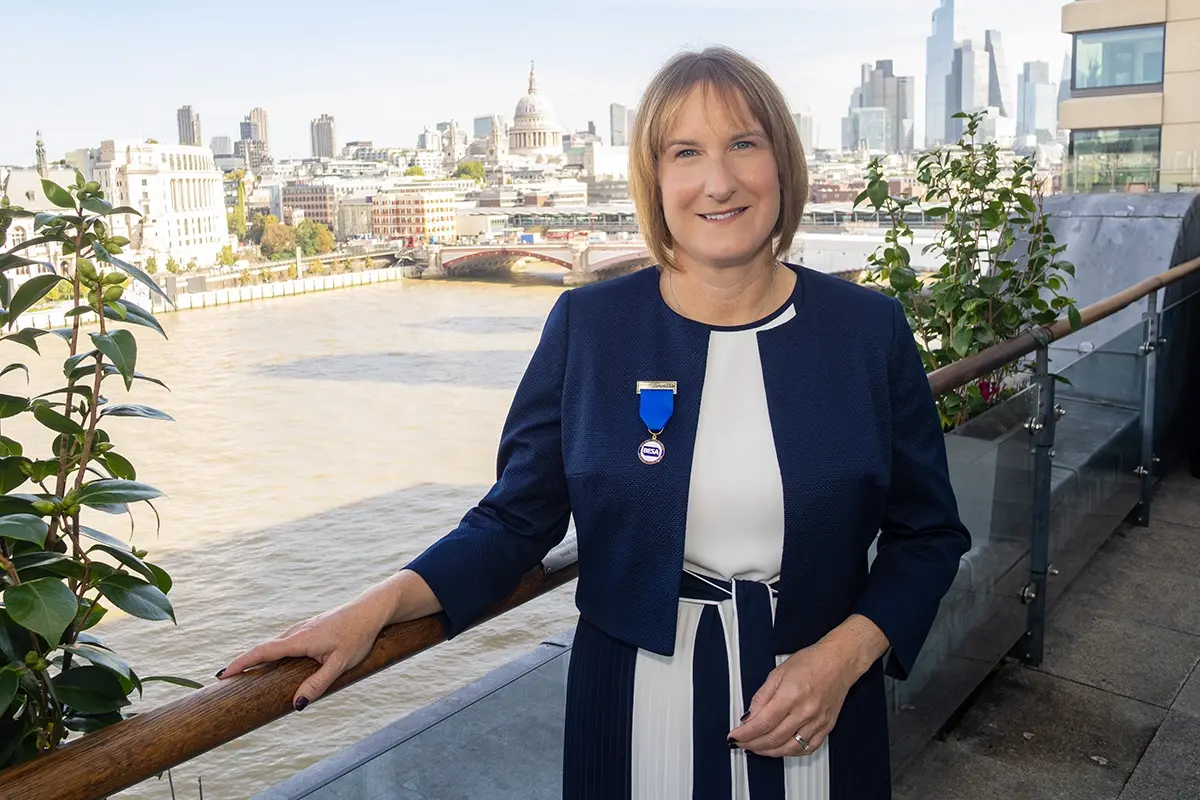
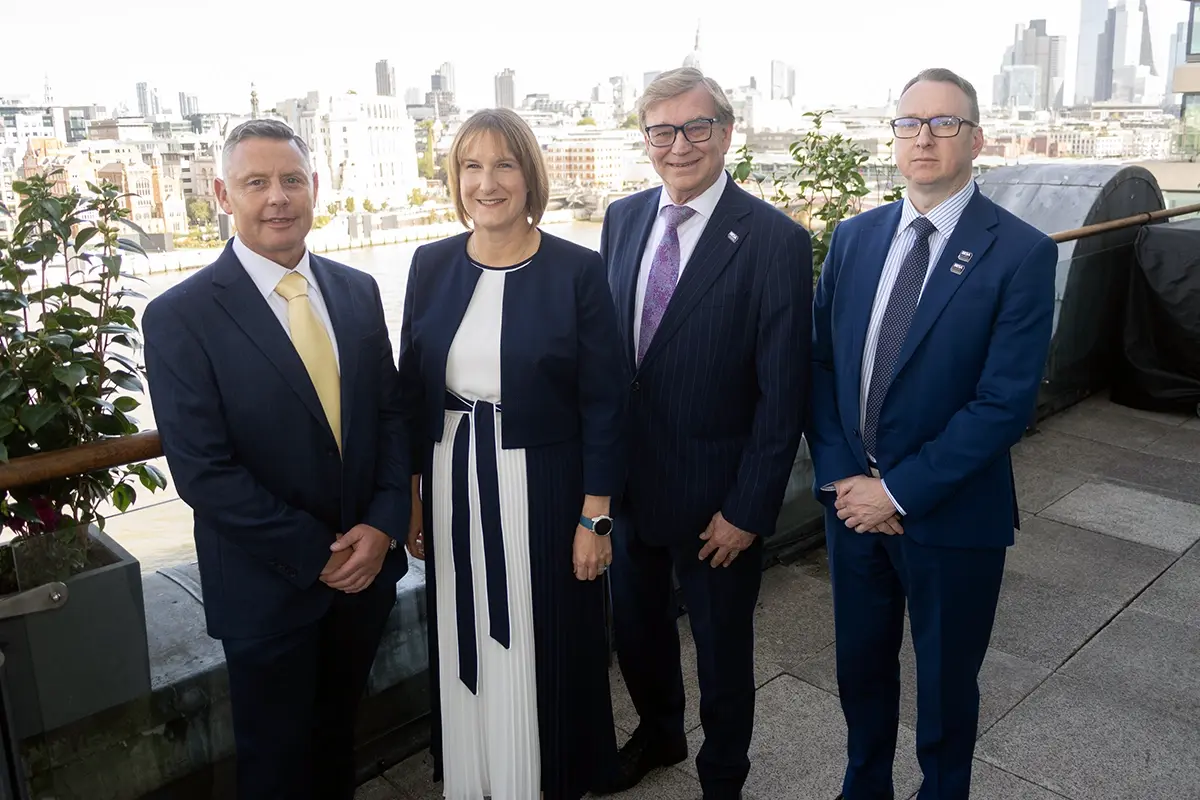
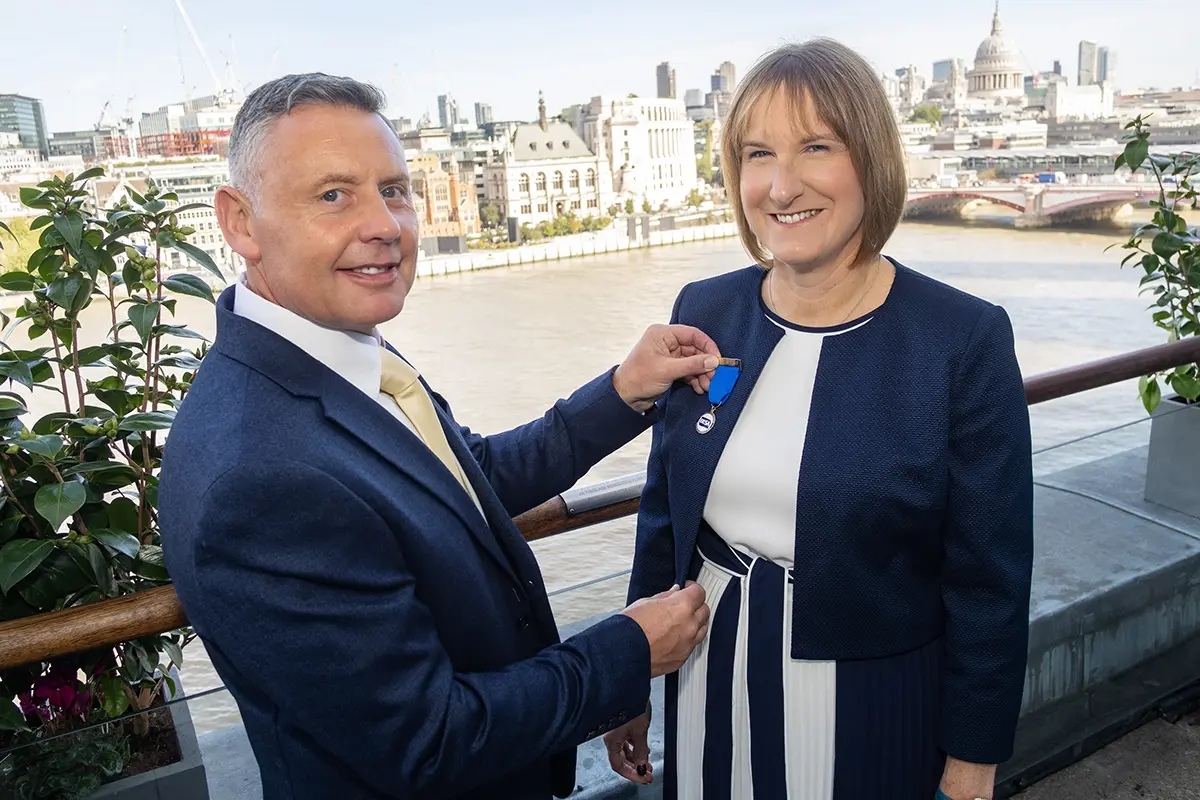
Explore more moments from the BESA President’s Lunch in our full photo gallery on Flickr.
BESA Officers - Supporting The Leadership Of Our Association
BESA's Officers bring together experienced leaders from across the building engineering sector who support the President and play an important role in the governance and strategic direction of the Association.
Together, they bring a breadth of technical, commercial, operational and people expertise to BESA's leadership.

BESA President Elect
Nick Mead, MEICA Systems and Engineering, Laing O'Rourke
Nick Mead has more than four decades of experience in building engineering, spanning contracting, consultancy and senior technical leadership. A Chartered Engineer and former CIBSE President, he brings extensive technical, regulatory and industry expertise to BESA, where he serves on Council and the Technical Committee and chairs the Building Safety Act Group.
Nick Mead has more than four decades of experience in building engineering, spanning contracting, consultancy, technical leadership and industry representation.
He began his career as an apprentice with Haden Young in 1978, studying for an HND at National College before completing a BSc in Environmental Engineering at the Polytechnic of the South Bank in London. He became a member of CIBSE in 1985 and achieved Chartered Engineer status in 1993.
Nick's career has taken him through senior roles with Haden Young, WSP, ACDP and Imtech MEICA before joining Crown House Technologies in 2017 and transferring to Laing O'Rourke in 2018.
As Technical Director of MEICA Systems and Engineering at Laing O'Rourke, Nick's team provides expertise across mechanical and electrical systems and passive fire. The multidisciplinary team includes chief engineers, technical managers, authorising engineers, fire engineers, lift engineers and digital specialists, supporting projects with technical and safety compliance as well as working with manufacturers on product innovation.
Throughout his career, Nick has been an active contributor to the wider building engineering and construction industry. He served as CIBSE President in 2015/16 and continues to contribute to the institution through a number of committees and as a member of the CIBSE Services Board. He also works with the Construction Products Association on product regulatory change and is the Construction Industry Council champion for Modern Methods of Construction.
Nick plays an active role within BESA, sitting on BESA Board and Council and serving as a member of the Technical Committee. He also chairs BESA's Building Safety Act Group, helping the Association and its members respond to the changing regulatory landscape and the increasing focus on competence, compliance and building safety.
In recognition of his contribution to engineering, Nick was granted the Freedom of the City of London through the Worshipful Company of Engineers in 2014.
Outside work, Nick enjoys anything that involves tools, fixing or making things work, from DIY to classic cars. He also enjoys walking in the Berkshire countryside with his two dogs and is a keen Formula 1 fan. With four children and seven grandchildren, his practical skills are regularly put to use well beyond his own home.

BESA Vice President
Paul Eagle, Dalkia Engineering Limited
Paul Eagle has almost three decades of experience in building engineering, progressing from an electrical and technical background into senior technical and business leadership. As Technical Director at Dalkia Engineering, he brings extensive expertise in engineering, compliance and people development to BESA, where he chairs the Technical Committee and is an active member of the Building Safety Act Group.
Paul began his career with an interest in electronics, studying for City & Guilds qualifications at night college before joining a trainee project manager scheme at Hills Electrical in the late 1990s. This marked the beginning of a varied career that has seen him work as an electrician and test engineer before progressing through electrical safety, project engineering, project leadership, design management, modern methods of construction and central technical leadership.
Throughout his career, Paul has worked across a wide range of sectors and major projects. He is particularly proud of his involvement in healthcare developments, the redevelopment of Liverpool city centre, now Liverpool ONE, and the Francis Crick Institute in London.
In his current role as Technical Director at Dalkia Engineering, Paul has been responsible for developing the technical strategy for a major UK MEP contracting business. His remit has included BIM, information management, design management, central engineering, commissioning, quality and sustainability, alongside supporting the integration of the former Imtech and SPIE businesses with a strong focus on compliance.
Developing people has also been a significant part of Paul's career. Having benefited from the support of mentors himself, he is passionate about creating similar opportunities for others. He has led professional development programmes supporting around 60 colleagues towards industry recognised qualifications and professional accreditation, and has helped develop young people through cadet and apprenticeship programmes. He is also establishing pathways at Dalkia to help colleagues work towards professional status through mentoring, support groups and engagement with industry bodies.
Paul's involvement with BESA began through the Association's Offsite Group. He now chairs the BESA Technical Committee and is an active member of the Building Safety Act Group. He sees his role within BESA as an opportunity to give back to an industry that has shaped his career, share his experience and help support its future direction.
Paul holds an MSc in Senior Leadership and has been recognised during his career with the Ann Noblett Engineering Award for Professional Engineer of the Year.
Outside work, Paul enjoys keeping active through the gym, running and golf, as well as DJing. He is married with two young children.

BESA Immediate Past President
Pete Curtis, Briggs & Forrester Group
Peter Curtis has 35 years of experience in building services, progressing from a pipefitting and welding apprentice to senior operational leadership with Briggs & Forrester Group. With a strong focus on people, skills and professional development, Peter has been actively involved with BESA since 2008 and has held a range of leadership roles across employment policy, apprenticeships, regional representation and Council.
Peter Curtis has spent his entire 35 year career in the building services sector with Briggs & Forrester Group, developing extensive experience across operations, people management, skills and workforce development.
Peter originally hoped to become an electrician, but on leaving school an opportunity arose to join Briggs & Forrester Engineering Services as a pipefitting and welding apprentice. From there, he progressed through a succession of roles including Supervisor, Labour Manager, Production Manager and Resources Operations Manager before becoming Group Services Manager.
His career has given him experience across many areas of building services, but he has developed a particular interest in people and their professional development, and the positive impact this can have on productivity and business performance. Building on his practical experience of senior HR and people management issues, Peter completed a master's degree in Human Resource Management at the University of Northampton.
One of Peter's proudest achievements was mentoring a plumbing apprentice who went on to achieve a bronze commendation at the WorldSkills competition in Abu Dhabi in 2017. He has also served as an employer ambassador for the UK WorldSkills team and as a representative of The 5% Club.
In his current role, Peter engages with the Briggs & Forrester Group Board on strategic operational initiatives, helping to improve efficiency and align activity across the Group's businesses.
Peter's involvement with BESA began in 2008 when he joined what was then the Operative Standing Committee, now the Employment Policy Committee. He went on to chair the committee, contributing his experience to issues including the National Agreement, trade unions and employment matters affecting the industry's hourly paid workforce.
His wider involvement with BESA has included representing the Agency Alliance Executive Committee, participating in the Trailblazer Employer Development Group and associated specialist working groups, and serving on the BSE Apprenticeship Board. In 2021, Peter became East Midlands Regional Chair and a BESA Council representative, further strengthening his involvement in the leadership of the Association.
Peter's long standing involvement with BESA, combined with his operational and people focused experience, gives him a strong understanding of the challenges facing building engineering businesses and the importance of developing the skilled workforce the industry needs for the future.
Outside work, Peter enjoys keeping active through the gym, running and cycling, as well as DIY projects. He is married with two daughters and enjoys spending time on the Hampshire south coast.