



- 99% of landlords have mould problems in their housing stock
- A third of tenants report that mould is present in five or six rooms of their homes
Nicola Rivers, indoor climate specialist at BESA member Zehnder Group UK, examines the growing problem of mould in homes and its impact on the health of thousands of building occupants. She analyses her company’s detailed research into the issue, why many landlords believe the problem is insurmountable and what the industry can do to help.
 No building is immune. Condensation is an often-overlooked issue that silently develops inside buildings, leaving behind potentially severe consequences. While it might seem harmless, if left unmanaged it can have a significant impact on a building’s structural integrity and the health of its occupants.
Mould outbreaks are caused by excess moisture building up inside a property and a lack of adequate airflow to remove that moisture effectively. This causes condensation to form on cold surfaces as water vapour turns into liquid.
Older buildings without sufficient insulation are particularly vulnerable, as colder walls can encourage moisture to condense. However, even newer buildings designed with improved insulation to meet net zero objectives can experience problems if airflow is restricted or compromised.
In our efforts to build more energy-efficient, airtight homes, we often overlook the effect this can have on indoor air quality. Without adequate ventilation, excess moisture and stale air become trapped inside the building, creating an unhealthy environment. Effective ventilation is key to solving this problem.
The Scale Of The Crisis
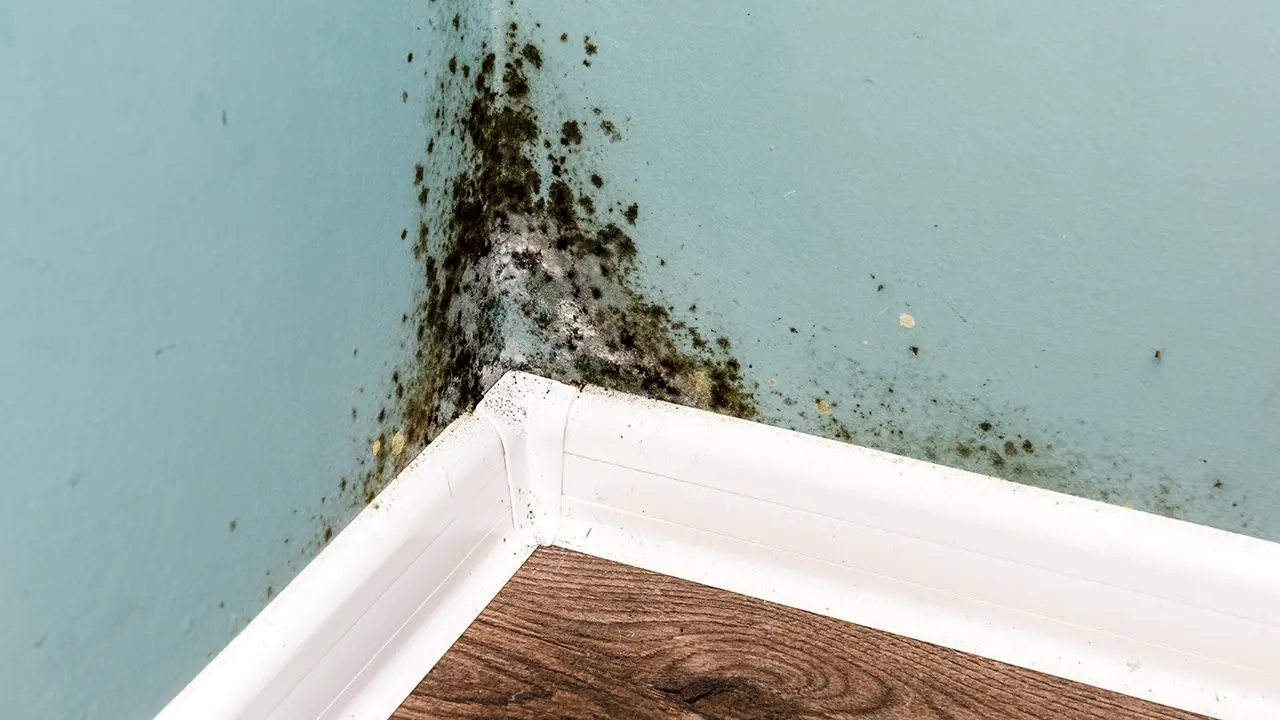
Zehnder’s research found that 99.2% of UK social landlords report having mould in their housing stock, while almost a third of tenants surveyed said that mould was present in five or six rooms of their homes.
More than one in ten landlords said mould affected over half of their housing stock. The weather was identified as the main root cause by 41% of respondents.
The study surveyed social housing landlords and tenants in London to establish the extent to which they were experiencing mould and condensation in their homes.
It asked questions designed to provide a better understanding of the mould problems faced by landlords and tenants, how widespread they are, how they are currently being addressed, the support people need and the barriers to change.
Other causes identified by landlords included older buildings (36%), humidity (34%), condensation (28%), poor ventilation (23%), recently installed insulation (22%) and general damp (17%).
 Although landlords had tried multiple strategies to solve the problem, 51% admitted that some methods worked only temporarily before the mould returned. A further 16% said the approach had not worked at all and the mould remained.
When asked how the returning mould made them feel, 64% of landlords said they felt frustrated or angry, 57% felt worried or scared and 30% felt embarrassed.
In the Zehnder study, more than half of tenants surveyed (54%) admitted to turning off the extractor fans in their bathrooms and kitchens, despite these often being the only form of ventilation in the property.
The reasons given suggested a lack of understanding, with 36% concerned about heat loss, 34% concerned about running costs, 33% citing noise and 18% saying they did not believe the fans were needed.
The scale of the problem can appear insurmountable. Among the social housing tenants surveyed, 46% said mould was present in three or four rooms, 32% reported mould in five or six rooms, 12% had mould in one or two rooms and one in ten said mould was present throughout their property, affecting seven or eight rooms.
 The mould does not affect only the wet rooms in these properties. Worryingly, it is also found in living and sleeping areas:
- Wet rooms, including bathrooms and shower rooms: 40%
- Main bedrooms: 32%
- Dining rooms: 30%
- Children’s bedrooms: 28%
- Living rooms: 25%
- Kitchens: 25%
Understandably, 98% of tenants surveyed said they worried about the mould in their homes. Their leading concerns included their health, their children being exposed to mould, its effect on allergies and the need for constant cleaning, each cited by 21% of respondents.
One in five spent money repainting and worried about their possessions being damaged, while 19% were concerned about its appearance. A further 16% worried that walls or ceilings might collapse.
Barriers To Solving The Problem
Landlords identified technology (37%), cost (36%) and a lack of knowledge or understanding (31%) as key barriers to resolving mould problems. Just under a third cited local authorities (29%) and a lack of support (28%).
More than a quarter (27%) identified property occupants as a barrier, while 98% of landlords believed that mould problems were associated with a lack of education about maintaining a healthy home, including drying washing indoors, turning off fans and keeping windows closed.
However, tenants may also be making the problem harder to address by failing to report mould and turning off the ventilation systems intended to help. More than a quarter of tenants surveyed (28%) had not sought external help, while 83% had not spoken to their landlord about the mould in their home.
Managing condensation in homes, particularly in social and rented housing, requires a multifaceted approach and the right balance between heating and ventilation.
 Upgraded insulation must be considered alongside an effective ventilation system that regulates indoor humidity and promotes a healthy indoor environment. Without this, we risk creating airtight homes that deteriorate over time.
While condensation on its own should not necessarily be a cause for concern, it can lead to costly problems for both the property and its occupants.
Persistent condensation on walls and ceilings during colder weather can damage interior finishes and potentially compromise a building’s structural integrity. Prolonged moisture accumulation can also cause building materials to decay. Over time, this can weaken structural components, lead to costly repairs and jeopardise the safety of the property.
Condensation-induced moisture also undermines the effectiveness of insulation materials, reducing their thermal performance and defeating the purpose of insulating for energy efficiency.
This constant interaction between warm indoor air and cold external surfaces increases heating demand, drives up energy costs and places additional strain on building systems.
Most alarmingly, the conditions created by condensation provide the ideal environment for mould and mildew to develop. This can lead to damp and black mould, with airborne spores potentially causing respiratory problems and allergic reactions among occupants.
A Call To Action
While around a third of landlords surveyed were approaching the issue by installing improved ventilation or consulting an expert (29%), others were following general advice that did not address the root cause of the problem.
These approaches included applying a fungicidal wash (28%), using anti-mould spray (25%) or bleaching the affected area (24%). Such measures may provide only a temporary improvement or fail to resolve the problem altogether.
A quarter of landlords surveyed said they had asked occupants to change their living habits. However, many were still washing mould away with soapy water (21%) or painting over it (17%), so it is unsurprising that the mould returned.
The mould epidemic is a stark reminder of the need for a more holistic approach to social housing. It is about more than repairing a patch of damp or installing a fan. It is about creating homes that are safe, healthy and fit for the future.
As an industry, we need to help landlords navigate this crisis and provide them with the information and tools required to make their properties healthier. We are part of a complex picture in which education, accessibility and collaboration are essential.
 BESA’s Indoor Air Quality Group, of which Zehnder UK is a member, has produced a series of freely available guides covering indoor air quality, damp, mould and the crucial role of building ventilation. These can be accessed through the Group’s Indoor Air Quality resource area.
The Group includes members from other industry bodies and professional institutions, as well as contractors and manufacturers. It aims to promote the collaboration needed to find solutions to this growing problem.
In particular, its Guide to Mould and Damp was published in 2023 and is now being used by social and private-sector landlords as a starting point for developing strategies to address a problem that threatens to overwhelm them.
Targeted indoor air quality training is also available through the BESA Academy.
“There are no silver bullets for addressing indoor air quality and no ‘magic box’ air-cleaning solutions,” said Adam Taylor, chair of the Indoor Air Quality Group.
“Improving indoor air quality is a building engineering issue that requires solutions that can be applied throughout entire buildings.
“Individual products have an important role to play, but they must form part of a joined-up, whole-building solution based on fully designed, professionally installed and commissioned systems. These systems must then be maintained throughout their operational life and supported by ongoing measurement and monitoring of airborne contaminants.
“Just as net zero cannot be delivered by individual technologies such as heat pumps, improving air quality in buildings requires integrated solutions,” added Taylor, who is also CEO of ARM Environments.
BESA is also staging two sponsored walks to mark this year’s national Clean Air Day in support of the Ella Roberta Foundation, which is dedicated to raising awareness of air pollution and its impact on human health.
The Association’s Next Gen network of young engineers and its specialist Indoor Air Quality Group will lead the walks, sponsored by Nuaire and S&P Ventilation.
The first event will take place on 19 June in London to highlight the impact of air pollution in an urban setting. The second will take place in the Peak District the following day to emphasise the health and wellbeing benefits of clean air.
To take part in either or both walks and support the Ella Roberta Foundation, visit the website to register.
BESA also supports the annual World Ventilation Day, which takes place on 8 November.