



Ventilation is the industry’s biggest professional anomaly, but BESA’s director of competence and compliance Jill Nicholls asks is there change in the air?
Anyone who works with gas, electricity or refrigerants must be properly trained and certified, but literally anyone can fit a ventilation system.

We wouldn’t contemplate putting our health and welfare at risk by having an unregulated person fit or service our boiler, but when it comes to the air we breathe it seems that anything goes. Yet, the average person spends 90% of their time indoors ‘consuming’ between 10,000 and 11,000 litres of air per day at a rate of 12-20 breaths per minute at rest, but keeping that air clean and refreshed is the most overlooked frontline health issue.
The dial started to shift following the Covid-19 pandemic when the speed and ease of airborne contaminant spread became clearer and more immediate, but there has still been no movement on the industry’s lengthy clamour to make ventilation a controlled service – just like gas, electricity and refrigerant handling.
There is also a health scandal looming to rival that of the UK’s solid wall insulation disaster: Tens of thousands of mechanical ventilation with heat recovery (MVHR) systems have been installed in heavily insulated and sealed homes. Many were never commissioned and were simply wired up and connected to flexible ducting crammed into the available space without any allowance for air flow.
Noisy
A significant proportion have never been maintained, and many have been switched off by users because, as their filters clog, they become increasingly noisy. In many cases, they are the only source of ventilation for these tightly sealed and heavily insulated homes, and the health impacts are already evident.
The World Health Organisation (WHO) states that more than three million people worldwide die every year “due to illnesses resulting from harmful indoor air in their homes” and radon has been identified as the second biggest contributor to lung cancer after smoking.
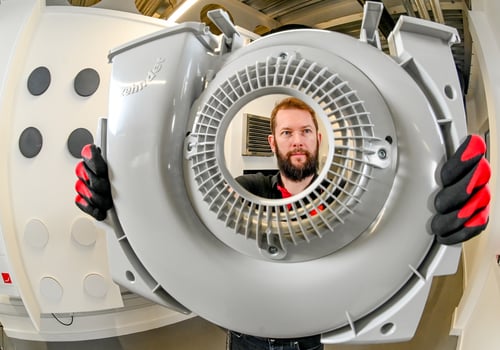
“While the UK boasts some of the best specialist mechanical and electrical (M&E) contractors, without a national qualification, there are simply not enough who are ventilation qualified and able to do the job,” said Stuart Smith, commercial director of Zehnder Group UK and a member of BESA's Indoor Air Quality Group.
“This leads to uncompetitive quotes, shortcuts being taken, and a worryingly high number of poor installations. 80% of all the warranty calls we receive are the result of poor installation or maintenance,” he added.
The ventilation industry has changed out of all recognition in the last 20 years, but as these comments demonstrate, our sector’s skills have failed to keep pace with technological advances.
Ventilation used to be ‘easy’ because it was primarily a fan in a box with the most sophisticated thing being the occasional timeclock and our buildings were leaky. Now it is much more sophisticated, and our buildings are far better insulated and airtight, so engineers must now take into account airflows and balancing systems for performance and controlled energy consumption.
Many of today’s systems are app driven and AI is also starting to play a part in how systems are set up, commissioned and operated.
“We see tradespeople from all disciplines; plumbers, electricians, pipefitters, trying to install ventilation to save time or budget and it’s putting people’s lives at risk,” adds Smith. “It is not through fault or laziness, but because there simply aren’t enough qualified ventilation specialists out there. That’s the cycle we need to break.”
Manufacturers have been challenged to step up and play their part, and Zehnder has done just that, investing in a new training Academy at its Surrey headquarters. The facility, which opened at the end of January, contains a simulated indoor environment, in the form of a working apartment, with fully operational heating, cooling and ventilation units for testing and experimentation.
It also features a Posi-Joist ‘rig’ for design, ducting and connector training, and a wide range of equipment for live demos and hands-on training in maintenance, servicing and commissioning. The company said its approach was a practical attempt to marry the energy efficiency aims of the forthcoming Future Homes Standard with keeping indoor environments healthy and comfortable.
Network
Zehnder wants to build up a nationwide network of ‘Approved Partners’ – engineers qualified to install and maintain not only its own products but to gain transferrable skills to benefit all projects, to ensure higher quality, consistency and confidence for customers and building occupants.
“We can’t wait for a political solution,” said Smith. “The progress towards a national competency framework is slow and focused mainly on residential applications. That’s why we decided to take matters into our own hands.
“We want to see installers and consulting engineers in our Academy, and we also want to see apprentices coming through, so this plays a big part in upskilling the sector far into the future,” he added.
While technology is plugging some of the skills gaps through greater automation and easier installation and commissioning, installers and maintainers must still have good fundamental skills and an appreciation of the elements that are needed to make indoor spaces comfortable and safe.
While the overall skills picture is worrying, we shouldn’t decry the excellent companies we do have. In fact, the UK has some of the best M&E contractors in Europe investing in people, processes and products to be able to deliver high quality systems, but too often they are priced out of work and out of the industry by less scrupulous firms.
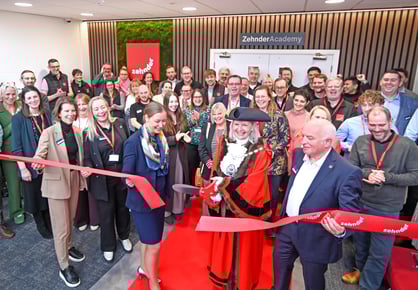
Better regulation and enforcement will ensure only competent and compliant firms can be specified and that will change everything. This chimes with BESA’s own Member Pledge initiative where third-party accreditation drives specification and best in class businesses insist their supply chain partners are also able to prove their technical and professional competence.
This is the kind of model that will change our industry for the better.
As will the new certification pathway BESA has created to help ventilation hygiene contractors demonstrate professional and technical competence and compliance in line with the Building Safety Act. Created by the industry’s certification scheme the Ventilation Hygiene Register (VHR), the process is based on BESA’s industry standard TR19® and provides a third party verified auditable route for demonstrating competence, compliance and best practice in ventilation hygiene services for air systems.
Zehnder’s Academy is designed to be part of this wider shift towards better and wider understanding of the discipline of ventilation and the preparation for a more regulated industry. It is something that has been talked about for years, but could we now hope that change is finally ‘in the air’?
To access a suite of guidance and routes to competence and compliance in ventilation visit the BESA Ventilation Toolkit here.
Industry professionals can also register their interest for forthcoming courses at the Zehnder Academy here.