


Construction Act Payment & Adjudication
Introduction
- On 1 May 1998, Part II of the Housing Grants, Construction & Regeneration Act 1996 came into force in England and Wales.
- On 1 October 2011, Part II of the Housing Grants, Construction and Regeneration Act 1996 was amended in England and Wales, by the Local Democracy, Economic Development & Construction Act 2009 (Part 8).
This summary guide is to help you have an overview of the Construction Act amendments in relation to Payment (note: there is a more detailed BESA guide to operating and understanding the Act).
The Amended Act Came Into Force On
- 1 October 2011 in England and Wales
- 1 November 2011 in Scotland
- 14 November 2012 in Northern Ireland
The Act provides a mandatory framework for the following two issues within all qualifying construction contracts (note: it does not apply to labour-only, supply-only or consumer contracts):
- Payment, and
- Disputes (adjudication)
If the contract is non-compliant with the Act, the accompanying regulations then replace the non-compliant provisions.
1. Payment Requirements
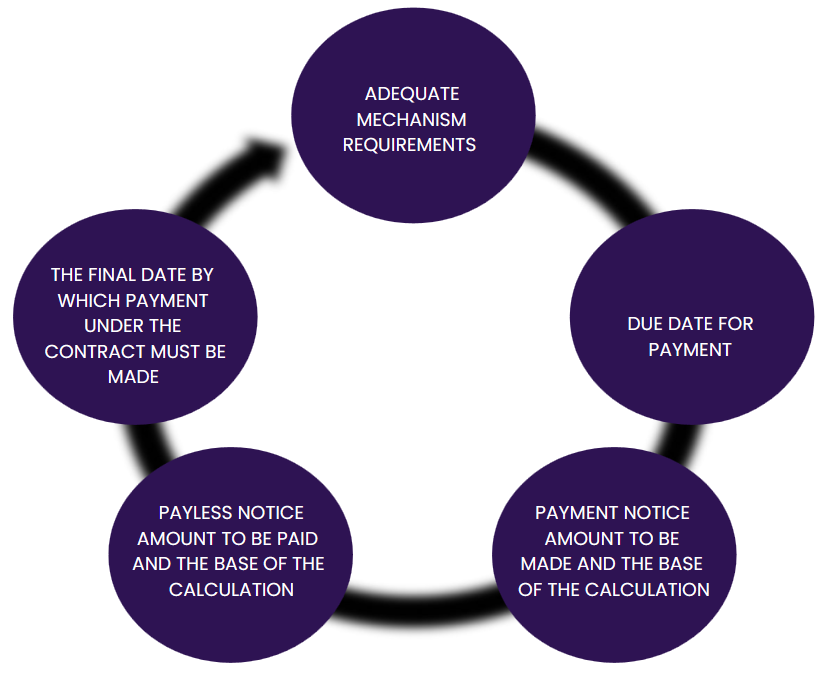
The Act states that every contract for 45 days or more must provide for an adequate mechanism by which the parties can determine what payment becomes due and when for interim payments. The diagram shows an adequate mechanism requirements of the payment cycle:
1.1 Time
In addition, you must have the following dates within the contract:
- 5 days after the due date a payment notice date – if this is missed by the debtor, the creditor can issue a default payment notice
- Pay-less notice date – if missed the amount in the default payment notice will be the amount which must be paid on the final date for payment
- Final date for payment – payment should be made of the sum included in the last notice
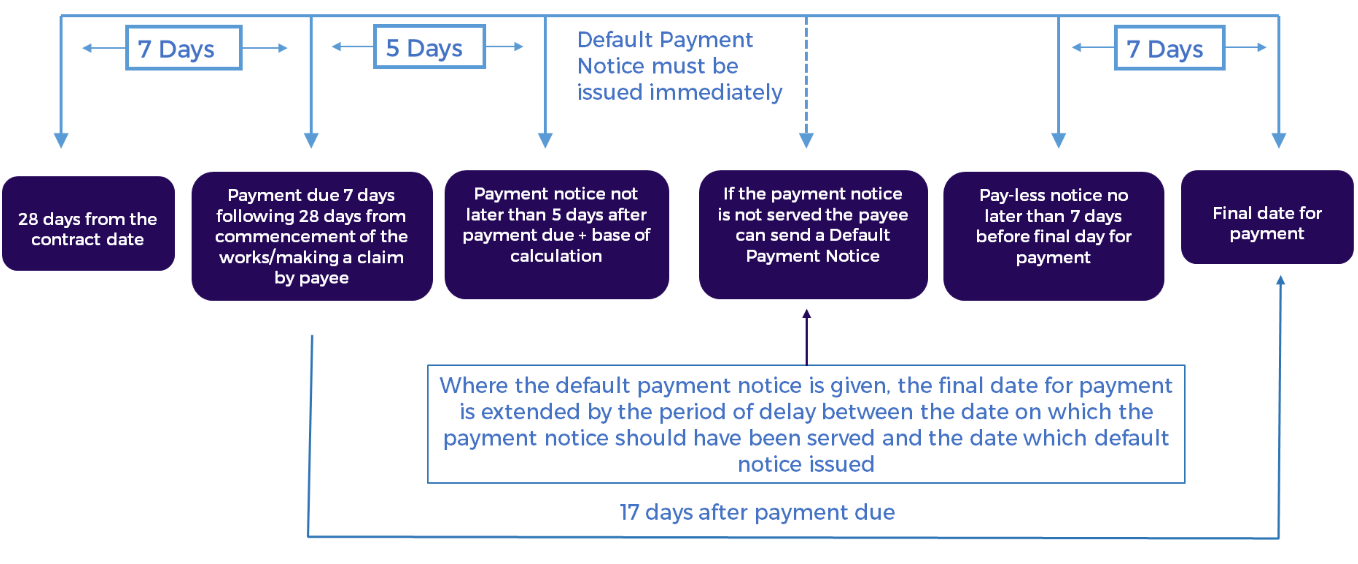
If the payment notice from the paying party is not issued on time, a default payment notice can be issued, but it needs to be done straight away as any delay will delay the final date for payment.
Except for the payment notice, the parties are free to agree how long apart the above dates fall. However, the mechanism will not be adequate where:
- Payment is conditional on the fulfilment of obligations under another contract (not applicable where it exists in a contract for the carrying out of construction operations by another party i.e. construction management contract).
- The due date is dependent on the issuing of a notice to the person being paid specifying the amount due.
1.2 Amount
Unless the contract specifies otherwise, the calculation of the payment itself will take into account the following:

1.3 Suspension
If the party owed money is not paid on the final date for payment the sum identified as due in the last notice above, it can, on seven days’ written notice and identifying the reasons for suspension, suspend any or all remaining performance under the contract. If it does so and is paid, the contract is extended proportionately and the creditor can recover its reasonable costs of suspension.
This is even helpful at the end of the project as it allows suspension of both the obligation to handover integral documents like warranties or O&M manuals, and the obligation to rectify defects. However, you must be sure of your position and procedure when exercising this right of suspension as, if you get it wrong, you may end up in fundamental breach of contract.
1.4 Pay-When-Paid – 3rd Party Insolvency
The Act makes clauses that make payment conditional upon events under other contracts, unenforceable. The only exception to this is where there is upstream insolvency.
1.5 Regulations – Scheme For Construction Contracts
The back-up system which is imported by the Regulations into the contract where the contract is non-compliant, is summarised below:
Payment
Diagram below explains how the interim payments are expected to be made:
2. Adjudication
There are key basic requirements which must be reflected in the contract or else the Regulations will wholesale replace the contractual adjudication system, but essentially, every party to the construction contract can refer a single dispute to adjudication at any time.
The adjudicator has 28 days (extendable by 14 days) to run an investigatory judicial procedure whereby he/she gathers facts, submissions and evidence and issues a decision which will be binding unless the parties agree otherwise or challenge it in the courts or arbitration.
If the Act’s basic requirements are not met in any way, the Regulations will wholesale replace the contractual adjudication system importing a timetable for service of notices outlining the nature of:
- the dispute;
- contract;
- parties; and,
- redress sought.
Summary
The Act implies into all qualifying construction contracts:
- Mandatory payment notice/ payment communication cycle;
- Level of detail needed for notices is bare minimum but still must be issued on 0 balance payments.
- Payment dates cannot be conditional upon other contracts – this outlaws pay-when-certified on retentions.
- Check the notice and communication requirements of the contract to ensure you do not fall foul when claiming payments.
- The ability to lawfully suspend is significant commercial leverage in recovering unpaid sums.
- Pay-when-paid clauses are unlawful, but not if the 3rd party becomes insolvent – don’t accept these clauses.
- Quick and cheap justice under adjudication which allows independent quasi-judicial decisions to be made and projects to progress.
Please note: this factsheet was last updated in June 2025, is aimed for general information purposes only and does not constitute legal or other professional advice. The information is considered to be correct at the date of publication however any changes and further developments may impact the accuracy and validity of the information provided here. For further advice or assistance with a contract review please contact Legal & Commercial team on legal@thebesa.com.