


Supply Chain Finance
1. Background
In the early 2010s, following discussions with the Bank of England and some of the largest UK companies, then-Prime Minister David Cameron emphasized the importance of creating sustainable protection and growth opportunities for SMEs through supply chain finance. Today, in 2025, the principles of supply chain finance have continued to evolve, providing large corporate businesses with opportunities to support their SME suppliers with substantial funding.
2. What Is Supply Chain Finance?
Supply chain finance, also known as supplier finance, is a set of financial solutions designed to improve cash flow for small and medium-sized suppliers. It allows large corporate businesses to extend their payment terms while giving suppliers the option to receive early payment through a banking facility that leverages the credit rating of the larger company. This approach helps to address the issue of delayed payments and enhances the efficiency of working capital. Today, many large corporations across various sectors have implemented supply chain finance programs to support their suppliers’ cash flow while optimising their own working capital.
3. What Is The Purpose Of The Scheme?
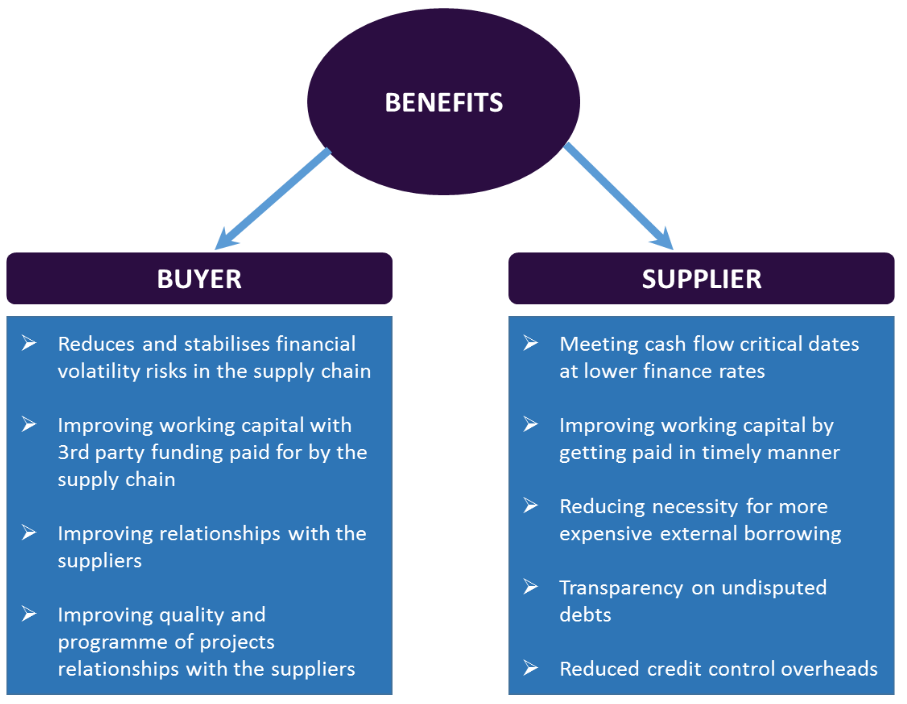
The purpose of the supply chain finance scheme is to help small and medium-sized enterprises overcome challenges related to accessing sufficient funding. Unlike larger companies, SMEs often face higher financing costs and limited access to capital. The scheme aims to address these issues by allowing SMEs to get paid earlier, secure their cash flow, improve their financial stability, and ultimately strengthen the entire supply chain. Additional benefits include fostering innovation, protecting jobs, supporting research and development projects, and increasing investment in training. This is all made possible by providing early payments to suppliers based on the creditworthiness of their larger customers.
4. How Does Supply Chain Finance Work
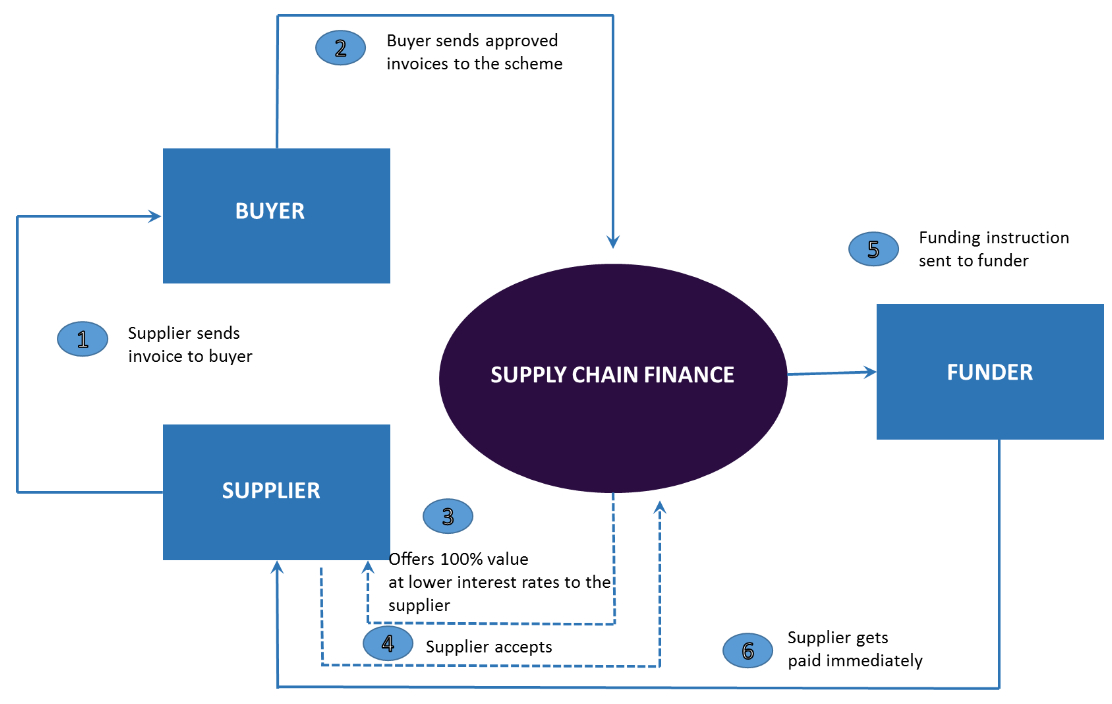
Supply chain finance works through a streamlined process that involves both the supplier and the buyer. First, the supplier sends an invoice to the buyer. Once the buyer approves the invoice, it is forwarded to the supply chain finance platform, which then offers the supplier the option of early payment at a lower interest rate. If the supplier accepts, the funding instructions are sent to the financier, and the supplier receives payment immediately. The buyer then pays the financier at the agreed-upon terms.
The diagram below outlines how supply chain finance works:
5. What Are The Risks?
There are several risks associated with supply chain finance that both parties need to consider.
- Performance risks: These involve the supplier’s obligation to maintain warranties and service standards. Any changes in materials or equipment can impact compensation, so contracts must be carefully worded.
- Manufacturer risks: When dealing with custom-made products that can’t be sold to other buyers, the supplier usually covers the cost of alterations. This means buyers might need to commit to payments earlier to mitigate these risks.
- Transport risks: These relate to the movement of goods and materials. It’s essential to have insurance and clear delivery terms to cover any potential disruptions or changes in transportation routes.
- Currency risks: If any party is based in another country, fluctuations in currency value can impact costs, so contracts should include provisions to account for these fluctuations.
6. What Are The Benefits?
7. Supply Chain Finance In Construction
In recent years, supply chain finance has become increasingly important in the construction industry. For example, the web-based platform URICA has continued to support UK businesses by enhancing cash flow, with hundreds of subcontractors and suppliers benefiting from its program.
Similarly, Oracle’s Textura Payment Management Cloud Service has revolutionised the construction payment process. By 2025, it had processed over $1 trillion in construction payments, covering more than 120,000 projects and benefiting over 200,000 subcontractors1.
In the UK, many large companies across various sectors, including Balfour Beatty, Wilmot Dixon, and Jaguar Land Rover, have also adopted or considered similar supply chain finance programs. Additionally, non-bank organisations and fintech platforms, such as Oxygen Finance and C2FO, offer innovative solutions to support SMEs. Oxygen Finance reported record revenues in 2024 and expanded early payment programs to benefit over 19,000 small businesses2. Meanwhile, C2FO secured a $30 million investment from the International Finance Corporation in 2025 to expand their platform and support SMEs globally3.
However, it’s important to note that some businesses have misused these programs by extending their payment terms even further, which goes against the original intent of supply chain finance. The goal is to create a fair and balanced system that benefits all parties in the supply chain.
1. Oracle Textura Surpasses $1 Trillion in Construction Payments Processed
2. Presenting the Oxygen Finance Group Annual Report 2024
3. C2FO accesses $30M investment with World Bank-backed IFC
Please note: this factsheet was last updated in June 2025, is aimed for general information purposes only and does not constitute legal or other professional advice. The information is considered to be correct at the date of publication however any changes and further developments may impact the accuracy and validity of the information provided here. For further advice or assistance with a contract review please contact Legal & Commercial team on legal@thebesa.com.