


Behind The Built Environment Episode 20
Why UK Construction Projects Fail Before They Start
Most construction problems are created before a project even reaches site.
In this episode of Behind the Built Environment, BESA Chief Executive David Frise speaks with Beth West, founder and director of Navigate Advisory and former Chief Executive of East West Railway Company, about why construction projects fail at the earliest stages.
Drawing on experience across HS2, Thames Tideway, Transport for London and East West Rail, Beth explains how poor client capability, weak project definition and misaligned incentives drive cost escalation and inefficiency across the UK built environment.
Rather than focusing on delivery alone, this episode examines the decisions that shape outcomes long before construction begins. It challenges the assumption that building is always the answer, explores the risks of uncontrolled design development, and highlights how procurement models, culture and lack of trust continue to limit performance across the industry.
This episode explores:
- Why construction projects fail due to poor early decision making
- The role of the client in defining scope, outcomes and value
- Why building is not always the right solution
- How procurement models limit innovation and productivity
- The impact of complexity and uncontrolled design development on cost
- How trust, culture and data transparency shape project outcomes
From housing policy and infrastructure delivery to procurement reform and the Building Safety Act, this is a practical discussion about how early decisions shape outcomes across the UK built environment. It also raises fundamental questions about capacity, skills and whether the industry is solving the right problems in the first place.
If you work in construction, infrastructure, building services engineering or public sector procurement, this episode is a direct and practical examination of why the industry keeps repeating the same mistakes and what it would take to stop.
Watch Now
David
Hello, I'm David Frise, Chief Executive of BESA. Welcome to Behind the Built Environment, the podcast where I delve into the major issues facing our industry through in depth conversations with key industry leaders. Join us as we explore the trends, challenges and innovations shaping the future of the built environment. Today’s guest is Beth West, founder and director of Navigate Advisory and former Chief Executive of East West Railway Company.
Beth has spent her career at the sharp end of major infrastructure, commercial leadership and project delivery. Her background includes project finance, Transport for London, London Underground, Thames Tideway, Balfour Beatty, HS2 and East West Rail. Beth, welcome to the podcast.
Beth
Thank you.
David
Quite a journey it has been. A transport journey, in fact. So we always start the questions piece with some quick fire questions. These require yes or no answers. Never as easy as you think it is going to be. So, number one, can the UK solve more of its infrastructure challenge by making better use of existing assets rather than always building new.
Beth
Yes.
David
Has complexity become a bigger threat to delivery than cost.
Beth
Yes.
David
Is building more always the best answer to growth.
Beth
No.
David
Is upfront capital cost still the best way to judge whether a project is good value.
Beth
No.
David
Is the industry short not only of people to deliver projects, but also of the expertise needed to make better decisions at the start.
Beth
Yes.
David
I think you win the prize for the most affirmative yes or no answers we have had so far. The question we always like to start with is this: did you choose the career or did the career choose you. How did you end up sitting here today in your current role.
Beth
So I'm giving you my politician's answer. It's a little bit of both. I became really interested in infrastructure in particular after the first year of doing my master's. I was in Bologna and we were studying the European Union and how France and Germany stopped shooting each other because of integrated economic systems and how their economies were developing a lot.
And the summer after that, I spent in Croatia when the war in the former Yugoslavia was going on and I thought it'd be a jolly good idea if people there stopped shooting each other. Looking at how you get people to really invest in their own development and stop having wars, people, when they are richer, tend not to shoot at each other.
So I became very interested in economic development and I wanted to do things that were not going to impose cultural values upon any. And I came across project finance and infrastructure because everybody needs infrastructure to develop, and every economy needs water and power and roads and broadband in order for their economies to grow.
So I chose to go into project finance after this bit of exploration into how do I help people's lives get better, and then it has been literally a journey since there.
David
And you founded Navigate Advisory. What does that do.
Beth
So it's, I mean, it's a consultancy of me basically, but it is about helping client organisations look at how do you deliver more effectively. I think clienting is not professionalised, which is a frustration of mine. It's not something that's viewed as something that you need skills to develop. And I think, having been around a lot of projects and pop up clients, there is a pattern of behaviour that keeps repeating itself.
And so what I want to do myself is help clients break out of that pattern and start the projects properly and move into being really cost effective in their delivery and ideally having less of an impact on the planet, but get the same outcomes.
David
It's interesting, in the week that the government announced the end of retentions in construction, there were several comments around how do we protect clients from this. And surely the answer is procure better and then you would not have such a problem with defects.
Beth
Yes. I mean, I think a lot of things with defects are that you do not want your contractors hanging around afterwards anyway. So there is a whole thing about getting your scope right and making sure you are assuring it properly before you declare completion. And there are lots of reasons, lots of good commercial reasons, why people declare practical completion before things are actually done, which I totally understand, but behaviour of contractors and contractor accounting, which is sometimes very interesting, means that it's going to be very, very difficult for anybody to come back and want to fix that problem.
So the onus really is on the clients to make sure that they are getting their money's worth when the job is done.
David
What would you say are the key factors or features of a good client. What makes a good client, do you think, in terms of the procurement process.
Beth
I think there are a lot of things. I mean, I have been saying this week that all projects are the same, but all projects are different. Which sounds ridiculous, but what I mean by that is that all projects have sort of the same lifecycle, but they have their own unique risks. And what happens very often is that companies will say this is how we are going to deliver it.
And then they think about the things that make it different after. And what I think clients really need to focus on is, well, what's driving my costs on this, what is making this different and what am I trying to achieve. Really, what am I trying to achieve.
And you have to set up properly. One of the first questions, and the reason we were in contact in the first place, is, is there a project to be built. What's your problem. And how can you solve this by doing something other than building. Is the first question. Can you put a traffic light in rather than a roundabout in order to manage traffic flows.
As a simple example. And I think that we jump into building sometimes. We jump into finding a solution looking for a problem, rather than going, I understand what my problem is, I understand who I am doing this for, and then that is leading me to the right scope and defining the right outcomes I am trying to achieve.
So it's a lot about that setup, understanding what you are doing.
David
I guess it is mirrored then by the construction process of building before you have designed it. Actually, if you think about how you intend to use whatever it is, or the problem you are trying to solve, then you have more chance of defining it more clearly and getting a good result.
Beth
Absolutely. And I was having this conversation with a client this morning, which was, oh, well, if we are looking at risks, do we really need to talk about operations. Can we just start talking about design. And the answer is, well, no, because the purpose of what you are building is to put it into operations.
The design is only in service of the thing that you are operating in the end. So you cannot just say, go left to right on this, because then I think also you get the wrong scope.
David
So when you have argued overcoming the building problem may be to actually build less, what do you mean by that.
Beth
It's looking at everything. And there is the boring bit, you need to look at your business case and really understand what the options are. And when I think about something like housing, and there is the statement of we need to build one and a half million homes, I am not sure that's the problem. There are a lot of people that are in unacceptable housing that need to be in better housing.
There are also a lot of empty buildings, and those people might not live in the same place. But the first question has to be, is there a way to solve this problem without building stuff. Because building takes a long time. Planning itself takes a long time, irrespective of the planning reforms. So looking at building as the first answer is not necessarily the right answer, because I think that you need to look at what all the options are.
And if there is a retrofitting opportunity, you probably are not going to have to go through planning. I mean you might, but you probably will not have to. It should be quicker. And if you are really trying to solve a problem quickly, how do you do that and how do you find ways to deliver that quickly.
I think there are also lots of ways to think about policy issues. There are lots of people who are living in four bedroom houses that are single families. The demographics of how people live are really changing and people do not necessarily like to move.
But can you incentivise people to maybe change. What are the ways to incentivise people, and that is a policy decision rather than being a building decision, to downsize and free up other space for bigger families.
David
The government have defined this really as a capacity issue and we just need to build, what is it, one and a half million homes. Yes, the majority of those would have to be flats if you are going to hit that target. And Pete Apps wrote a very interesting article on his Substack last week, I think, or a couple of weeks ago, saying actually demand is the issue.
We should also be looking at, and particularly around leasehold reform, so that is the point you make. It is as much political and legal as it is the ability to build. If there is no demand, why would you build.
Beth
Exactly. And I think it is looking at do we understand the demographics of what we are building now. There have been lots of conversations in London about councils wanting loads of three bedroom flats built. There are increasing numbers of people who are living on their own or just with a partner or just with a friend.
And looking at what is really the demand for our housing needs, and is there enough accommodation for seniors. If there is really good and affordable accommodation for seniors, would they still have extra rooms for their kids to visit. Would that encourage people to move out of their big houses, which are becoming increasingly difficult to maintain.
I think there are a lot of different levers you can pull. But it also requires, I think, that you look at short, medium and long term plans. Because building a million and a half houses is not a short term plan. That's not a short term solution. It might be a medium term solution, but it is probably a long term solution, and the problem is real and it exists right now.
So how do you fit in solutions that work in the short, medium and long term. That requires some thinking, and there are policy issues as well.
David
I was actually about to ask you a question. I see you have segued very nicely into that. Because we announce projects without really having honesty around supply chain limits, workforce constraints and delivery capacity. Do we have a skills problem or do we have a capacity problem. Are they the same thing.
Beth
It's a good question. I mean, we have been talking about the skills problem for a really long time and there are not enough people in the industry. A lot of people left because of Brexit. There have been a lot of people who have been working in the industry for a long time who are retiring or getting closer and closer to retirement age.
And it's not necessarily an attractive industry for kids to go into. So I think that there is always a risk. And the nirvana of lots of modular construction has not really landed, has it. So there has been a lot of talk about whether or not that's a solution to the workforce problem, but it has not resolved it either.
So construction is expensive, but it is also not productive.
David
But why do you think off site or modular construction really has not landed.
Beth
I do not know. I think this goes back to a procurement issue and it goes back a little bit into there being multiple stages to this. Part of it is about nobody likes to spend money until they get planning permission. But if you want to build something in a modular way, or you want to build something that is using design for manufacture and assembly, you need to spend a lot more money actually a lot earlier.
And I think that there is a problem between how much money you need to spend to do a modular build and how little you want to spend to get your planning permission.
David
You've also talked about better decision making. So is that a real skill shortage for us, that we have an inability to make intelligent decisions early enough in projects.
Beth
Probably. There are several dynamics as well, because I think that people who are designing like to design big things.
David
Right.
Beth
If you go into engineering, most people are not going into engineering to do a retrofit or to do something small. They are going into engineering because they want to build big things. So there is a natural desire to build bigger things. I think in a lot of the circumstances that I have had, especially working in government, there are not people who have the technical skills that are actually the decision makers.
And so you get into situations, and this is more infrastructure than the building side, where there is a lot of design development that is not controlled and it is not viewed by the engineers as change. It is just design development, just design development. And then you do a design freeze and then somebody costs something and the budget has exploded, and then often because of political pressure, you keep carrying on with your design and there is no time to go back and fix the problem.
So this is where you get costs escalating massively. But as a colleague of mine says, you have had this massive cost escalation, but you are no longer designing the same thing. It has changed beyond recognition. So yes, it is way more expensive than what the other thing was, but it is not the same thing. It is not controlled in a lot of circumstances.
And it goes back to decision making. Are people actually focused on the right questions.
David
I guess in the commercial world and non infrastructure world, that's the equivalent of the professional team designing a building the client cannot afford. They brief for a Stirling Prize winning exemplar building, but they cannot afford it. But that design time is lost, the financial clock is ticking, so then we value engineer our way into a solution that looks very much like the thing we put in for planning but is in fact just a facsimile.
Beth
Yes, yes. And there is not a sense that, and I think this is really important, what is your budget and designing to a budget. We seem not to want to do that. And it goes back to, okay, well where is the point at which it is no longer acceptable.
And how do you avoid making unpleasant compromises by designing to the budget to start with.
David
We often talk about a lack of innovation in the industry and certainly a lack of profitability in the industry, but it is one of the reasons why we do not see massive change. Actually the construction industry is very good at delivering profitability for development companies, for example, and clients. It delivers a very nice return, thank you very much. Therefore why would you want to mess with that by innovating, shall we say.
Beth
It's a really interesting question. And I still think the industry is unique and somewhat odd compared to lots of other industries because, other than house builders who often have the full vertical integration, you have a client and then you have got a contractor and you are always looking to the developer to specify the job.
The contractor is not specifying the job. And so unlike lots of other industries, any kind of manufacturing where if you are business to consumer you are looking for what sells to the consumer, construction does not do that. They are responding to a request by a client to do something a certain way. So I think that's how the innovation can often get lost.
Because unless the client is driving it, how do you bring the innovation in. How do you justify investing. How do you take those things forward when you are responding to a client request. I have been talking about how you can look at different ways of modelling consultancy, because it is normally bums on seats, you pay for bums on seats.
But we have loads of technology now that should be able to be integrated with people to get better, quicker answers. But we pay for bums on seats. So how do you actually pay for the designing of the model you are going to use to do lots of iterations. Because the value is not necessarily on hours of people working on it, it is on building of the model and then letting that run.
And so the innovation could happen. But the ways in which clients procure, I think, sometimes block that from happening, or a lot of times block that from happening.
David
I've just come back from the US and there was a lot of discussion at the conference I was at about the use of AI and whether it was a good thing or a bad thing for people. I think the general consensus was that it was going to increase the productivity of those people who are already experts.
Do you see that this will disrupt the industry significantly. Will it allow us to do more, or how do you see it impacting.
Beth
It's one of those things that is too soon to tell, I think, in a lot of circumstances. But one of my concerns is that a lot of the skills you get when you become the expert come through hard graft and lots of repeat work where you are learning how to design.
If you are a lawyer, you are learning how to draft documents. If you are in finance, you are learning how to run a model. You are looking at all these different risks. So you cannot get those skills without doing a lot of projects and seeing things from lots of different angles. So I think there is a risk that the kids these days are going to have a hard time getting that experience.
But I do not think we have necessarily figured out how we embed building expertise with the modelling. We are just sort of assuming it is going to solve all issues, where I think we need to figure out how we use it to its best advantage. So I think about computational design that's been around for a long time, and you can put in all of your constraints and then let a model come up with all the different permutations for building a building in London with your rights of light and the streetscape and how do you get your angles right.
And all of these questions. So you can let the model run that, but that's not your end answer. You still have to do lots of work once you get that shape, but it allows you to have more shapes than you could possibly ever think of before that. And that's a good thing, right.
You are trying to optimise. But it has to work in partnership with humans, I think, to get the best outcomes. It's allowing for those lots of variations and then allowing humans to do the things that humans really do.
David
Yeah. And one of those is the ability to look at something and say, yeah, that looks right, or that does not look right. Have another look.
Beth
But it's also about, does this building work for human beings. Does this thing allow people to move around in a way that people are going to want to live.
David
It's interesting. The value of the built environment largely seems to be discounted by many people. Ninety per cent of us spend ninety per cent of our time in a building and we have people who are made ill by buildings, we have people who are less productive, kids in school do not learn as well because the indoor air quality is not right.
How does that get sorted in this mix of the need to hit budget and the need to operate buildings as cheaply as possible. How do we square that circle.
Beth
Well, I think again it goes back to how do we think about what we are doing and do we think about who we are building for. We do tend to focus way more on profitability than thinking about human beings.
David
The question is, I have always kind of argued that the client does not want a building, they want a return on investment in a lot of these issues. So again, as long as it looks like the thing we put in for planning, with zero enforcement, you end up with buildings that do not work.
Beth
And there is a question about, when you are a building owner, how much do you care about your customer. When we are homeowners we care a lot about the customer because we are the customer of our house. So we really care about what's happening in there.
And I think when you've got a lot of the real estate investment trusts, they are kind of going, well, are we doing return on investment, are we a financial organisation or are we trying to provide a service to our customers. And that's a dichotomy that is really interesting from their perspective because they have lots of investors who want to make sure they are getting the return.
But I think that this is one of the things you also see on the high street, where people who own shops want to get a really good financial covenant. So there are phone shops, which might not be the thing that the people on that particular high street need, but the people who are the owners of the leasehold are not necessarily interested in that. They just want somebody who is going to pay the rent.
And I think that is where it is a really interesting split between the end user and the rent payer and the owner.
David
And society, is there not, because if it does not meet its energy targets, for example, we have to build more capacity into the grid. We build Hinkley C at the taxpayer's expense. So there seems to be a lack of social contract in that sense. The buildings that will be there for hundreds of years, yet the people who have got their return on investment have disappeared while the rest of us pick up the tab.
In the longer term, does that require a major rethink on the built environment and how do we get people to value it more.
Beth
It's a great question because I think we do value our environment. But I think there is a separation.
David
When it goes wrong though, then you value it.
Beth
But there is a separation between the people who use it and the people who own it. Do they have the same interests. Are their interests aligned. And I always think in any negotiation that in any good project you need to have aligned objectives. And I think in a lot of circumstances we do not have aligned objectives between the people who own the built environment and the people who use the built environment.
And that's where the social contract is broken down because building ownership is financial whereas building usage is social. So trying to get those aligned objectives, how do we do that. I do not know on that one.
David
No, I think that's a legitimate answer. I do not know. Very difficult. Could we talk a bit about complexity and particularly from your time on East West Rail. What did you learn about the cost of complexity and how much complexity is self inflicted.
Beth
There is complexity in a lot of things and I think one of the things that I have recognised for a long time is that we often try to solve complex problems with complicated solutions which then are not implementable. So it's really difficult and there is going to be someone very clever coming up with a complicated way to solve something and then when they leave the scene, the person who is trying to implement it does not understand it, so they do something else.
And at East West Rail, one of the things that was happening when I joined was that it was trying to be lots of things. So really the purpose of East West Rail is to be a commuter railway. And when you think about it as a commuter railway, you think about it in a much more straightforward way because it does not need to be fancy, it needs to be reliable.
As I like to say, you need to make sure that your kids are not chained to the fence post from nursery because you know the train is going to get you there. You are not going to move somewhere if you think that you are never going to be able to get home on time to pick your kid up from nursery or school or get to your yoga class or whatever it is that you are doing of an evening.
Those life choices are going to be dependent also on your transport and where your job is. And if the objective is to try to get people to move to that region and work in Cambridge Biomedical Campus at Addenbrooke's Hospital, you need to make sure that that train is reliable. So we were talking about stations and do stations need to be whatever.
And it's like, no, the stations need to be a shed because nobody should be there more than fifteen minutes ever. If they are there for more than fifteen minutes, something has gone wrong. So it just needs to be simple and dry and probably some toilets, but it does not need to be anything fancy. Does East West Rail need to have lots of great connectivity.
I would not say that is a priority because, yes, we want to be able to get to our Wi Fi and everything else, but if you are on the train for fifteen or twenty minutes, it does not need to be amazing. The train needs to be reliable so that people can depend on it.
And when you can strip things down to what is the purpose of why you are doing something, you can strip away some of that complexity because you are very focused on that key objective. And it should make your decision making easier rather than more complicated.
David
So avoid mission creep.
Beth
Avoid mission creep.
David
Good advice. Should we therefore spend more time, this is kind of part of this, but should we spend more time designing buildings before we start constructing them and make better use of digital tools and DFMA and other modern methods of construction.
Beth
I think we should, but I think that even before we start designing, there is a bit of that starting right issue of understanding who and why we are building for. Because you can design anything. Engineering can solve most things. It depends on whether or not you want to pay for it. So really understanding all of the reasons why you are building something and who you are building it for should allow you to spend that time in design more wisely.
And I do think if we want to move into more manufactured space, we do have to spend more time at the outset trying to understand what products are available to us and how we build them into our buildings.
David
And similarly, we have a huge focus on capital cost and yet that is a fraction of the total cost, the whole life cost. How do we break that focus on the initial cost of a building and saving pennies here that costs us hundreds of thousands over the lifecycle of the building. How do we break that.
Beth
It's really, really difficult. And it's one of these things that when you look across different sectors, everybody talks about TOTEX. And when you look at water, for example, you are looking at total expenditure. But at the end of the day, the money up front is what everybody ends up focusing on. When you have to make a decision between, oh well, should I spend a bit more to make it more cost effective later.
It is often eye wateringly expensive to do things at the outset. I think it's a really hard thing to break because also these assets are lasting for a long time. So these operating costs go on for a very long time. And each year's operating cost is a fraction of your capital cost, despite the fact that in total it is bigger.
So it's a hard thing to break. Probably the issue is how do we bring down capital costs so that we can focus more on the balance between capital and operating costs.
David
And does that mean more things like standardisation of design. Why should a hospital be different in Sheffield from Manchester.
Beth
I think the more that we can look at standardisation, the better. There are a lot of other things that I have noticed on projects in that people like to do something new or do it their own way. And the standardisation does not necessarily just need to be on design, but in how we organise data.
I spend more money than I'd like to say on paying for people to set up a project management office and my project controls. Why can I not have something in a box that I can just push a button and it pops up, that's my structure. It would be really useful. And then you would have better data as well, because everyone would be reporting data consistently in a bunch of different ways.
But I seem to have worked in loads of places where you have to set it up from scratch every time. That costs money.
David
I get that. But also the data sharing bit. We have a toxic relationship with information in construction.
Beth
We do.
David
The first question you ask yourself when you get a request is, how can that be used against me. And therefore you tend to hang onto it. Which leads me onto behavioural change and culture change. Surely they are the critical things that need changing in the industry. How do we go about that.
Beth
My flippant answer will be bring in more women because I think that there is a, well, that's more of a diversity point, because there are a lot of people who have the same behaviours that reinforce themselves over and over again. That is flippant, but there is a point that we need to learn how to communicate with each other and there is a trust point in the industry.
Nobody trusts each other. And I think that's been a longstanding thing. You bring up the data point really, really effectively because nobody should be arguing about the quality of the data. Nobody should be arguing about whether or not a number is right. You should be talking about how do you solve the problem.
But it goes back to are people's objectives aligned. Are we all trying to win here. I have never seen any of these things as zero sum games where I win and you lose. We both need to win together because we can both win together. And I have said loads of times as a client organisation that I do not want people to make no profit.
I want companies to make a profit, but I also want you to save me money. So how do we find ways that everybody can win on these jobs. And the trust element just is not there to do that. And it's an interesting dynamic. There is also a whole thing about people not trusting that they can raise an issue.
People are afraid that if they raise an issue that's problematic, they will get shouted at or fired. There are some really problematic behaviours in the industry that lead to the lack of trust.
David
Is that driven by contract law. Most of it is adversarial.
Beth
I do not know. I do not know where it comes from, but it is not going away. And you have had all these different reviews over the past however many years talking about being more collaborative. We are no more collaborative, right.
David
We are all very collaborative until it goes wrong. What does the contract say. Oh, you are liable.
Beth
Or we are collaborative with each other on the top tier of the supply chain, but down the supply chain, nobody is collaborative at all. And it all goes to really aggressive behaviour. I think that there are lots of things that we have to talk about in terms of what is this culture that we are trying to establish and how do we all win in this environment.
David
So in the UK, we have introduced the Building Safety Act, which is all about culture change, essentially, notwithstanding everything else. It talks about behaviour change, culture change, and in the competencies one of the SKEB criteria is behaviours. What behaviours do you think we need to change.
Beth
I think there are many. I think that this unwillingness to share information is really, really important. No one is going to get a better outcome if you do not actually acknowledge that there is a problem. So running three sets of books on a job helps no one. It makes sense at the time, but it does not help your client relationship.
If you are telling them one thing, you are telling your board another thing and then you have your real job, right, it does not help. So I do think going back to consistent data and the ways in which we are talking about it, and being able to have an honest conversation about what is actually going on, is the start of how you can move into a more trusting relationship.
But I think that there is still lots of shouting on site and all, you know, when I go out on site a lot of times I am looking at housekeeping, because housekeeping will tell you what's going on on the whole site. Are things in the wrong places. Is it a messy site.
All those kinds of things should be coming out of the Building Safety Act. They are the immediate red flag that something is not going well and it is about caring about your work, really.
David
There is increasing fragmentation and that is, how do you get that message through highly, highly fragmented sub, sub, sub, sub subcontractors.
Beth
Well, and I even think at the main contractors you have an issue, which is that you are not going back to the mothership very often. You are out on site all the time. So how do you even have a corporate culture at all. You just have your project culture. And often that's what you have got. You've got these very fragmented project teams that are around and they have the culture of the leader and that's it.
So some of this goes back to the client and what is the client doing and how does the client foster the right environment. But it's trying to make sure that the specialists who are down the supply chain feel like they are part of the work. And this might come back to design, and how they factor into what the design solutions are.
David
I think very often they know that the design is wrong, but if that's what you told me to build and that's the way I make money, so I will carry on doing what I've been told to do in the full knowledge that it's wrong.
Beth
But that's not a very good culture, is it. I mean, that's terrible. It's wrong, but I am going to do it anyway because that's what you've told me. And I'll make money, but then I might have to change it. No one wins there.
David
So apart from having to change contract law, the way we account for projects, the way we design and build them, everything else is pretty good. Yeah, it's pretty good.
Beth
But there are a lot of amazing things that are getting built. I think there's a privilege in working in this industry, because we do need to acknowledge that there is a massive privilege in being able to shape people's lives. And we do not talk about it enough. What we do is really important to how we all live.
And that is a privilege and it is something we should embrace as an industry.
David
I think so. And I think almost everybody that goes to a site in the morning has the intent of doing the best they can. And somehow we manage to mess that up on the way. But we still deliver fantastic projects.
Beth
We do.
David
But just in a really unproductive and hurry scurry way, which helps say we have not even talked about the mental health of people involved in this hurry scurry process. But all of those things, like untidy sites, I think the mental health and the suicide rate are tells of an unproductive system. So I am going to ask you a final question on this, and that is, so you are the new construction regulator.
What one thing would you change that would make a significant difference.
Beth
This is very utopian, but I think it's worth having everybody who is working on a job understand who they are building it for. So that there is a bit of a, and I hate the word chartering, but there is something about why are we doing this. It's like when you think about good teams, they know what they are trying to achieve and you understand why you are on the pitch or why you are in the boat and you understand what your role is.
Who are you as an individual and then what's the end objective. And if everybody on site were to understand that, would you get a better outcome.
David
And what their part is within that.
Beth
And what their part is, yeah. So it is like, if you are a striker, you know you are the striker, but you are still trying to win the game as much as the goalkeeper is. You have your part and you have got your role, but you are a team. And I think it is that whole thing.
And here again, that privilege of providing our built environment, knowing who you are building it for and understanding your role in making somebody's life better, that's really powerful.
David
Beth West, thank you very much for joining us today on Behind the Built Environment.
Beth
Thank you.
Relevant Links
More Episodes Of Behind The Built Environment
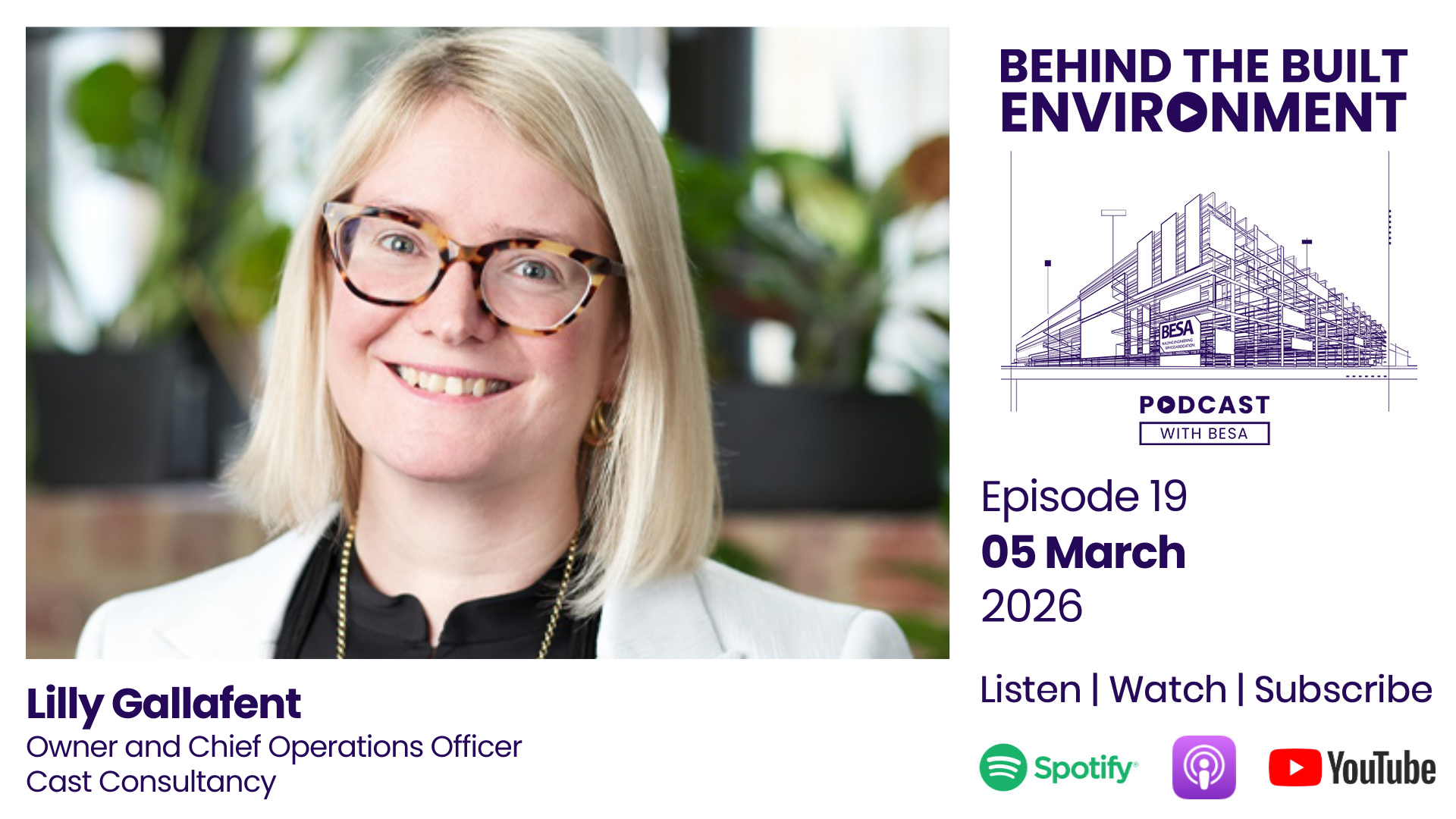
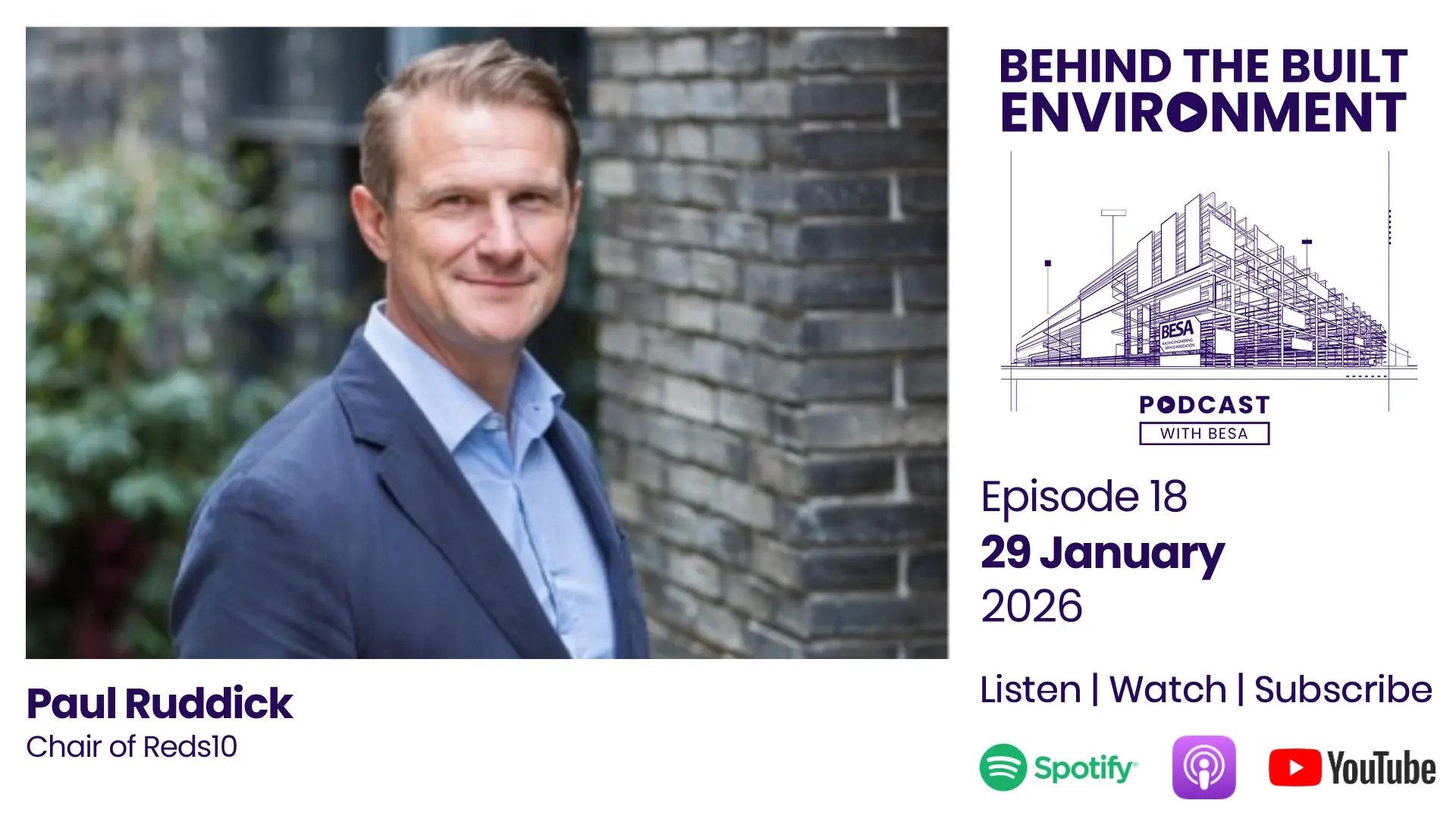
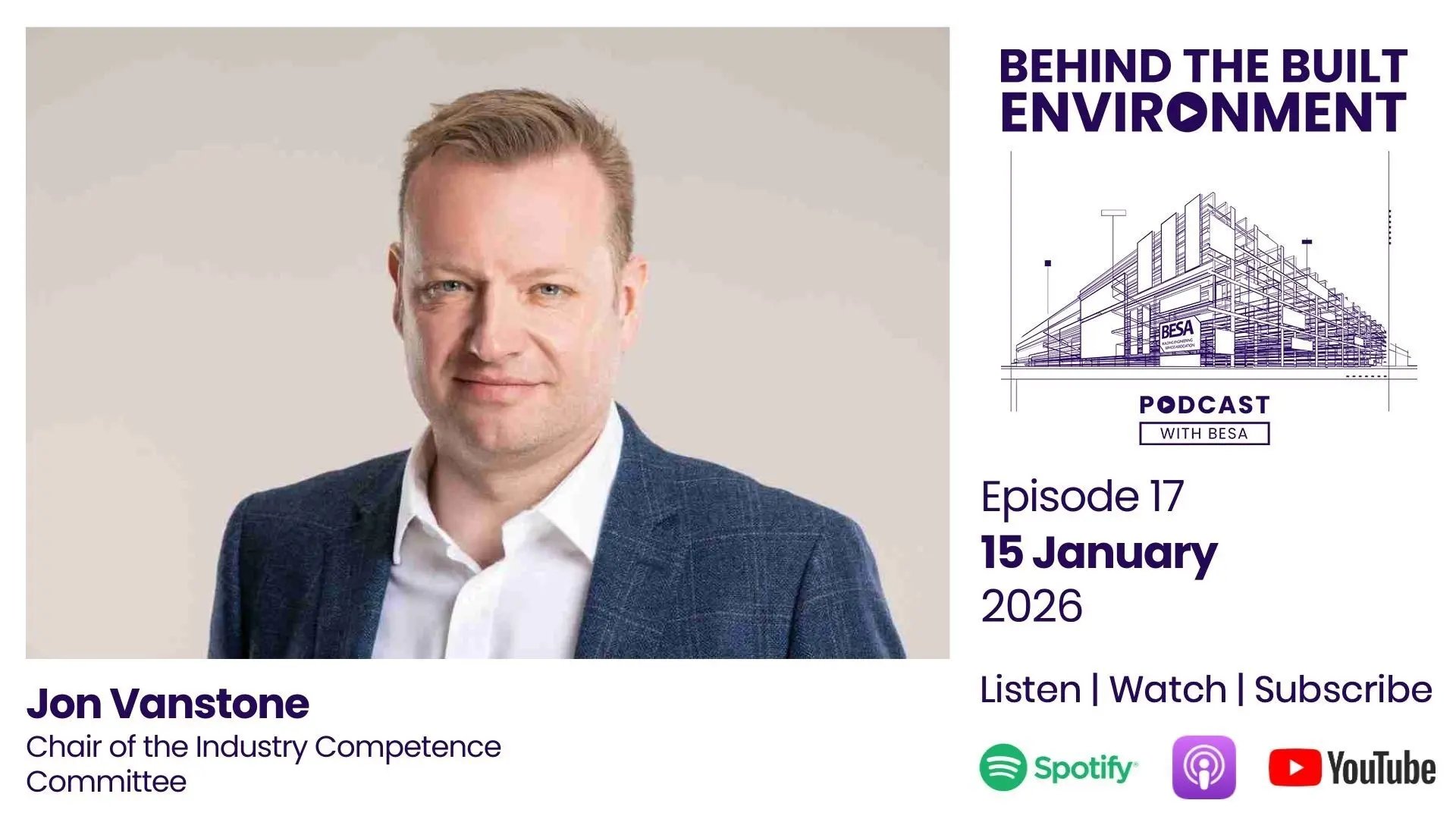
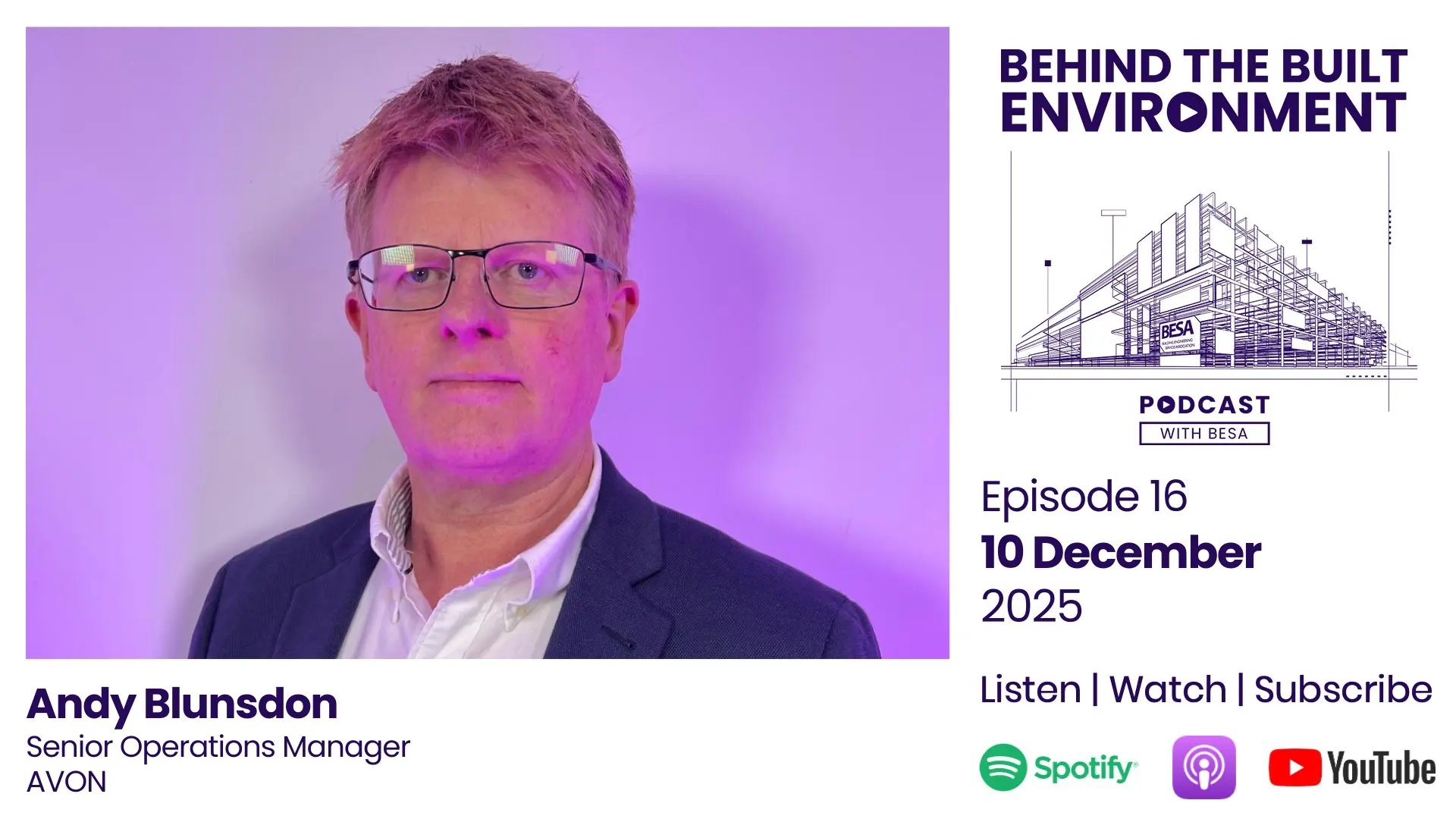
Find All Episodes, Watch, Listen And Subscribe
You can explore all episodes of Behind The Built Environment right here. Watch the conversations in full, listen on the go through your favourite podcast platform, and subscribe to stay up to date with the latest insights shaping our industry.
Whether you want to catch up on past discussions or tune in to the newest releases, it’s all in one place, making it easy to keep connected with the people and ideas driving change across the built environment.



Sign Up To Our Email List
And stay up to date with the Behind The Built Environment podcast